
For many people, the first signs of change show quietly in the mirror. A softer jawline, eyes that feel a little tired, skin on the arms or stomach that has lost some of its firmness. These are small shifts, but they can be enough to want a thoughtful, measured response. HIFU Treatment is one such option. It is a non-invasive procedure that uses focused ultrasound energy to encourage the skin's own collagen to rebuild, and it offers a steady improvement rather than an abrupt transformation. This page is a gentle overview of what the treatment is, how it works, where it can be applied and what to understand before considering it.
Understanding HIFU Treatment
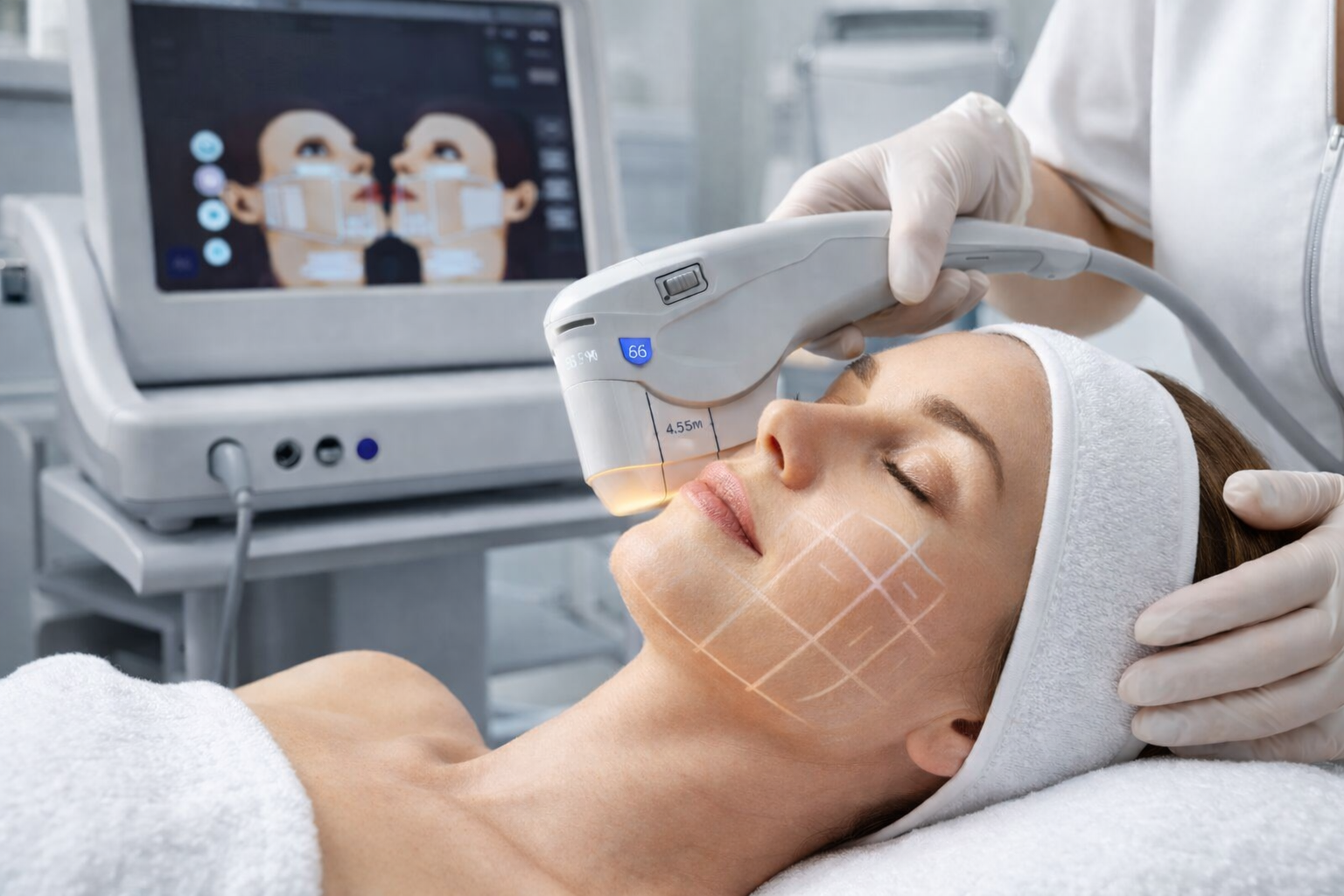
HIFU stands for High-Intensity Focused Ultrasound. It is a non-invasive cosmetic approach that uses concentrated ultrasound energy to reach specific layers beneath the skin's surface — layers that creams, serums and most surface treatments simply cannot touch. The energy passes harmlessly through the upper skin and releases its effect at a precise depth below, usually within the dermis and the Superficial Musculoaponeurotic System, often shortened to the SMAS. These are the same layers a surgeon works on during a facelift, only here there are no cuts, no stitches and no weeks of recovery.
The technology itself is not new. Medical focused ultrasound has been studied and used clinically for many years, and was later refined for cosmetic purposes. What makes HIFU Treatment interesting in aesthetic care is its precision. The ultrasound beam can be directed to different depths beneath the skin — typically around 1.5 mm, 3.0 mm and 4.5 mm — with each depth contributing something distinct. Shallower passes address fine lines and surface texture, while deeper passes reach the structural layer that supports lift and firmness.
Depending on the area being treated, a session can last anywhere from fifteen minutes to about an hour. Most people describe the sensation as a warm, prickling feeling as the energy is delivered beneath the skin. The procedure is generally well tolerated and does not usually require anaesthetic. You arrive, have the treatment and leave again, and most people return to their normal day straight afterwards.
The intention behind HIFU Treatment is quiet, not dramatic. It tightens skin that has softened with time and gently refines areas of the body where definition has been lost. It is not intended to replace a surgical correction, and it does not try to. What it offers is a soft, gradual improvement that reads as naturally refreshed rather than obviously altered — which, for most people, is exactly what they are looking for.
HIFU Treatment for the Face
The face is often where signs of ageing are first noticed, and it is also where HIFU Treatment shows some of its most considered results. Although the procedure is entirely non-surgical, a genuine lifting effect is possible because the ultrasound energy reaches the SMAS, the same foundational layer addressed during a surgical facelift.
HIFU Treatment is typically used to restore softness to features that have begun to drift. Cheekbones can appear more defined, the lower face can feel tighter and the overall facial shape often looks a little more composed. Because the areas needing attention vary from person to person, practitioners treat the face in zones rather than applying a single protocol across the whole face.
Forehead
The forehead is one of the most commonly treated zones. While HIFU Treatment does not change the overall shape of the face, frown lines and horizontal creases often respond well, and a light lift of the brow can open up the eye area. The effect is one of looking more alert rather than visibly changed.
Eye Area
HIFU Treatment can also soften the appearance of crow's feet and support a non-surgical brow lift by firming the skin above the lash line. This part of the face is more delicate because the skin is thinner, and a careful practitioner will adjust the energy settings accordingly.
Cheeks
The cheeks tend to respond particularly well. With age, the fat pads in the mid-face gradually descend, which is why many people notice hollowness beneath the eyes and heaviness around the jaw. HIFU Treatment can lift this tissue a little closer to where it once sat, restoring some of the natural contour.
Jawline and Under-Chin Area
The jawline and the area beneath the chin are among the most requested treatment zones. A defined jaw and a cleaner angle under the chin can quietly take years off someone's appearance. This is often the first place where softening becomes visible, and it tends to be where people are most pleased to see change.
Neck and Décolletage
The neck can show age sooner than the face. Targeted ultrasound at the appropriate depth can improve vertical bands, crêpey texture and looseness along the décolletage. The aim is not to change the face, but to support a more rested, healthier version of it.
HIFU Treatment for the Body
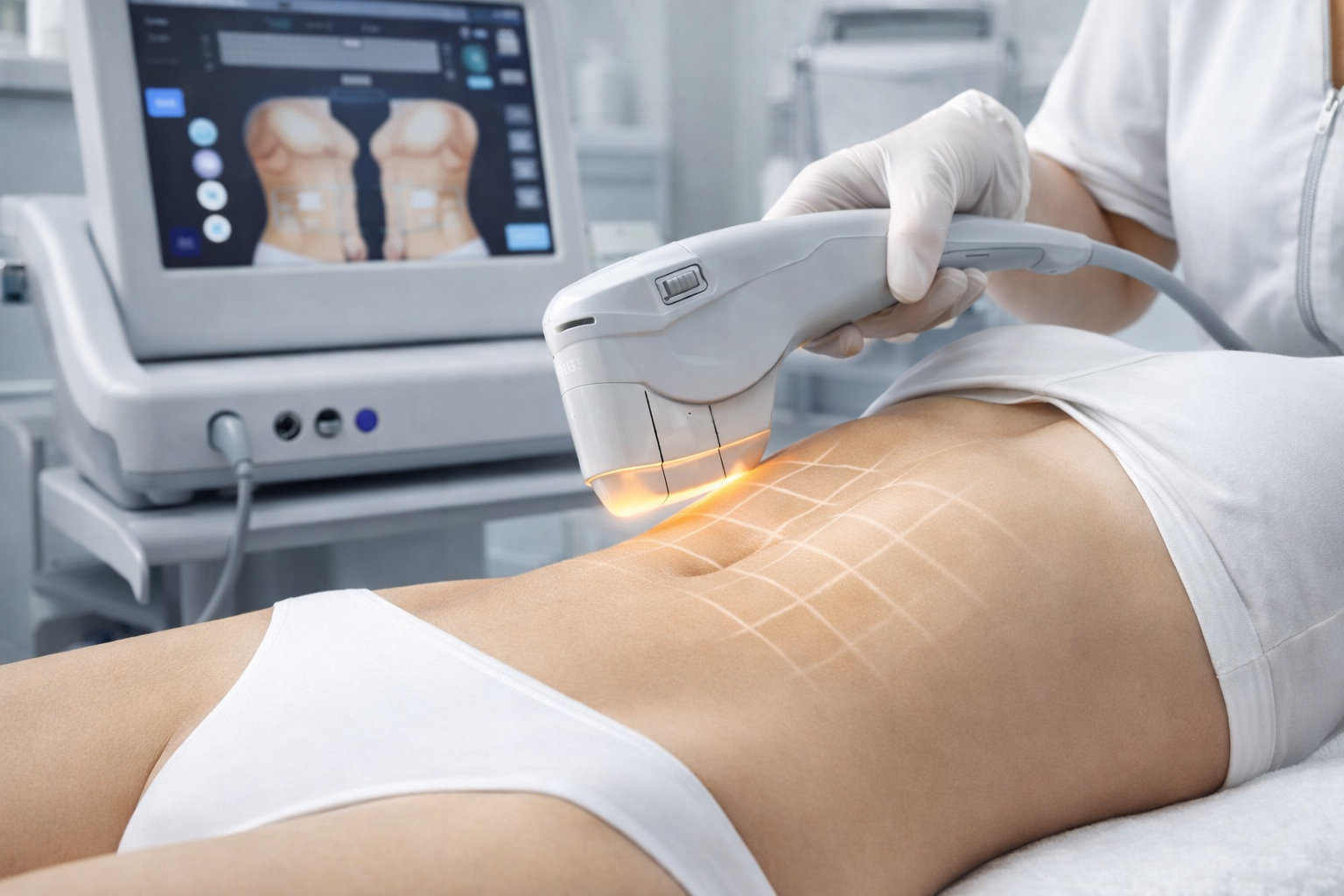
The reasoning that makes HIFU Treatment useful on the face applies just as well to the body, and it can be used in more areas than most people realise. On the body, there are two purposes: tightening skin that has loosened over time, and a quiet contouring effect on areas where firmness has been lost.
Stomach Area
One of the most common body areas is the stomach, where skin can lose elasticity following weight change or pregnancy. HIFU Treatment is not a substitute for diet and exercise and is not intended for significant weight loss. What it can do is firm the skin of the upper and lower abdomen, soften a stubborn pooch that has resisted other efforts, and create a more refined contour.
Thighs and Buttocks
On the thighs, HIFU Treatment can soften the appearance of mild cellulite and leave the skin looking smoother and firmer. The buttocks can be subtly lifted, and the area where the lower curve of the buttock meets the back of the thigh — which tends to loosen with age — can be tightened for a cleaner line.
Upper Arms
The backs of the upper arms are another area people often feel self-conscious about. Loose skin here can be difficult to address through exercise alone, because the issue is usually skin laxity rather than muscle tone. HIFU Treatment reaches the deeper layers of the skin and supports firming from within, which is why it tends to work well in this area.
Other Body Areas
Less obvious but still valid treatment zones include the back, the hips and love handles, the knees, and the backs of the hands. The hands often give away age even when the face looks fresh, and HIFU Treatment can bring a quiet firmness back to them as well.
Vaginal Tightening
There is also a more intimate application, where focused ultrasound energy is used to support internal tone after childbirth or natural age-related changes. For many women this is a supportive option that helps with comfort and confidence.
Wherever it is applied, the principle is the same. HIFU Treatment stimulates the skin's own foundational layers and allows them to firm up quietly on their own, in a way that feels natural rather than forced.
How HIFU Treatment Works
The idea behind HIFU Treatment is straightforward, and understanding it helps set realistic expectations. There is no magic involved, and no hidden ingredient. What is happening is a carefully controlled application of sound energy at specific depths within the skin.
How the Ultrasound Energy Reaches the Skin
A handheld applicator is moved across the treatment area, delivering small, measured pulses of ultrasound energy. Because the energy is focused — in the same way sunlight can be focused through a magnifying glass — the surface of the skin is unaffected. The effect is concentrated only at the chosen depth beneath.
At that depth, the energy creates tiny, highly localised points of heat, referred to as thermal coagulation points. The tissue around these points is left undisturbed, which is one of the reasons HIFU Treatment has a good safety record when performed by a properly trained practitioner. The skin then responds to these controlled points of stimulation in the same way it would respond to any focused cue — it begins a process of repair and renewal.
Stimulating Natural Collagen
Collagen is the protein that gives skin its structure and firmness. Its production slows naturally with age, and the existing fibres begin to break down faster than the body can replace them. This is why skin begins to feel looser, thinner and less elastic from the thirties onwards.
When HIFU Treatment places thermal points within the dermal and SMAS layers, it signals the skin to build new collagen. Fibroblast cells — the skin's collagen-making workers — become more active in response. Over the following weeks and months, new collagen is produced, the existing fibres are gently reorganised, and the skin progressively feels firmer and looks tighter.
The process also supports elastin, the other protein responsible for the skin's ability to spring back after being stretched. Together, collagen and elastin give the tightening and toning effect its natural feel.
How Precise the Targeting Is
Precision is one of the reasons HIFU Treatment is well regarded in aesthetic care. The energy reaches the chosen depth without disturbing surrounding nerves and vessels. A well-delivered treatment will often work across several depths within the same area. Deeper passes address the structural layer, while shallower passes support surface tone and texture. Rather than a one-size-fits-all approach, it is better thought of as layered, considered work.
Before treatment begins, the practitioner usually maps the treatment area with a light grid. This ensures even coverage and avoids missed or double-treated zones.
When Results Appear
This is where patience matters. HIFU Treatment is a gradual treatment, not an immediate one. Many people notice a slight tightening within the first week, but the real result builds over two to three months as new collagen forms. Most people see the fullest effect somewhere between eight and twelve weeks after a session.
How Long the Results Last
Results generally last somewhere between six and eighteen months. Some people enjoy longer-lasting benefits, particularly where skincare and lifestyle habits are supportive. For those who wish to maintain the effect, a session every nine to twelve months is a common approach. Results move with your own biology — nothing is being held in place artificially — so the effect rises and softens naturally in step with how your body renews itself.
The Benefits of HIFU Treatment
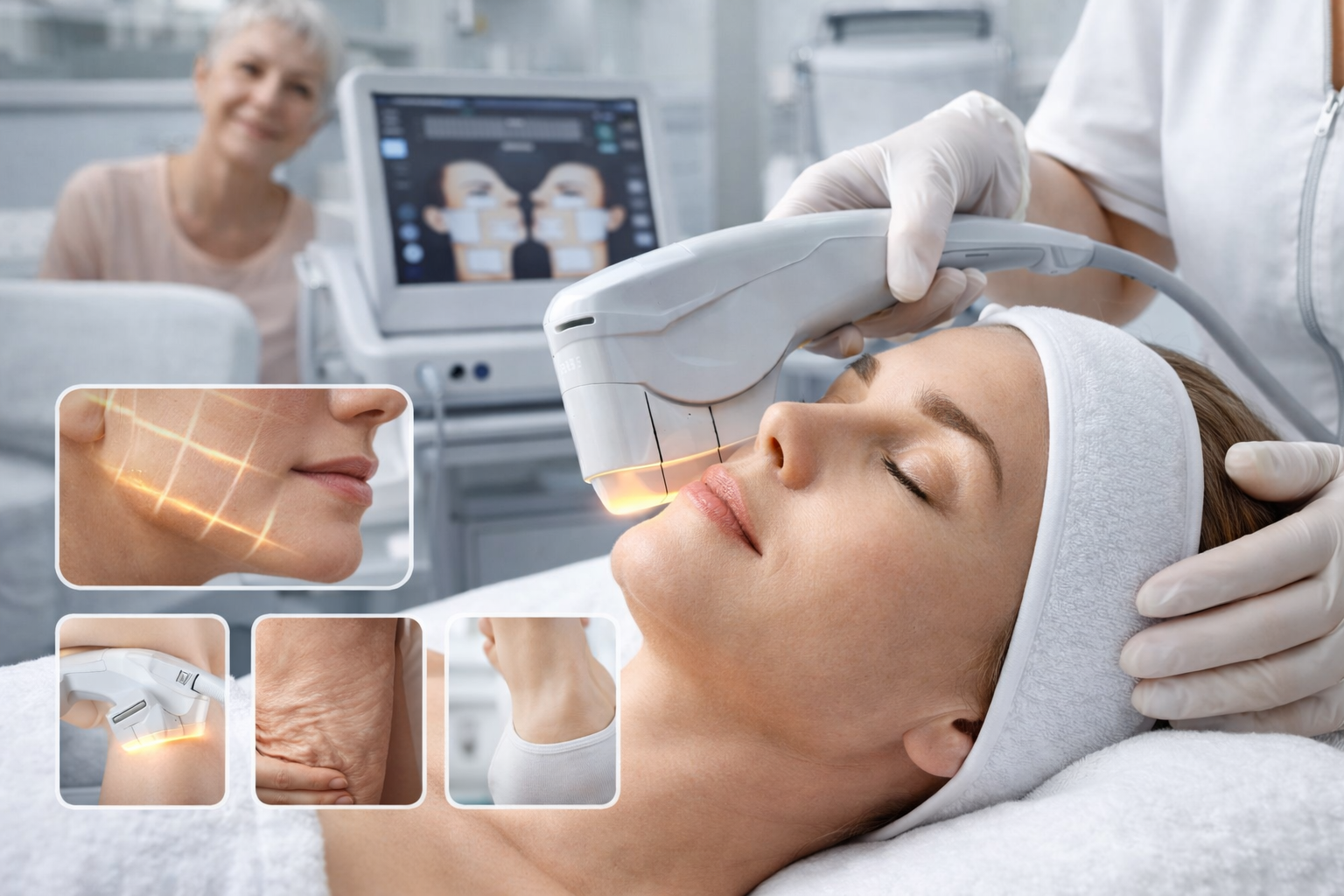
The appeal of HIFU Treatment lies in what it offers relative to what it asks of you. Surgical procedures give more dramatic, longer-lasting results, but they require real recovery, real risk and real cost. Topical products are gentle but limited in what they can do. HIFU Treatment sits thoughtfully between the two, offering visible improvement without the downsides of surgery.
No Incisions or Injections
Perhaps the most obvious benefit is that the procedure is entirely non-invasive. For those who feel uncertain about needles, or who have seen a family member recover from a facelift and felt uneasy about the process, HIFU Treatment offers a way to improve skin quality without that concern. There are no cuts to care for, no sutures to remove, and no bruising that needs hiding.
Very Little Downtime
Downtime is another important advantage. Many areas can be treated within the length of a lunch break, and most people return to their usual day immediately. A little redness or warmth in the treated area may last an hour or two afterwards, and makeup can usually be applied on the same day. This matters for anyone balancing work, family and daily commitments.
Gradual, Natural-Looking Results
Because the improvement comes from your own collagen rebuilding over time, the change is quiet and natural. You do not walk out of a session looking different, which is what most people actually want. Instead, friends and family tend to comment that you look well rested, without being able to say exactly why. The change is in the skin, not on it.
Versatility
HIFU Treatment is remarkably versatile. The same underlying technology can be adjusted for the face or the body, which makes it a practical option for anyone wishing to address several concerns without moving between different treatment modalities. Laxity along the jaw, soft skin across the stomach, a crêpey texture on the arms, dimpling on the thighs — all can be approached with the same core principle, adapted to the area.
Suitable Across Skin Types
The treatment is considered safe for most skin types and tones. Because the energy is ultrasound rather than light, it does not interact with melanin, which means it does not risk the pigmentation concerns sometimes associated with light-based treatments. For people with deeper skin tones, this is a meaningful advantage.
Long-Lasting Effects
The results hold for a long period — often close to a year — and maintenance, when it is needed, is straightforward. Compared with treatments that require monthly upkeep, HIFU Treatment is considerate of both time and commitment.
How HIFU Treatment Compares with Other Skin Treatments
The choice of treatment depends on what you want to change, how much recovery you can accommodate and the kind of result you are hoping for. A brief comparison helps place HIFU Treatment alongside the alternatives.
| Treatment | Main Strengths | How It Compares With HIFU Treatment |
|---|---|---|
| Ultherapy | Uses ultrasound directed at specific depths with real-time imaging, offering precise targeting and consistent lifting results. | HIFU Treatment is often a more accessible option, providing comparable tightening results without the higher cost typically associated with premium ultrasound platforms. |
| Chemical Peels | Exfoliate the skin's surface to support tone, texture, pigmentation and brightness. | Because HIFU Treatment works at deeper structural layers, it is not a competing option but a complementary one. Many people combine the two — surface renewal alongside deeper lifting. |
| Laser Resurfacing | Addresses texture, fine lines, scarring and pigmentation, with shallow collagen stimulation. | HIFU Treatment reaches significantly deeper, which is why it is the more appropriate choice when lifting and firmness are the priority. It also has easier recovery and less pigmentation risk on deeper skin tones. |
| Surgical Facelift | Physically lifts and repositions skin, delivering dramatic, long-lasting tightening. | HIFU Treatment offers a non-invasive alternative with no anaesthesia, no incisions and very little downtime. Surgery produces bolder, longer-lasting results — often several years — while HIFU Treatment offers softer, more gradual improvement lasting six to eighteen months. |
In short: if a significant structural change is wanted and surgery feels like the right step, a facelift is the most decisive option. Chemical peels and laser resurfacing are well suited to surface-level concerns. HIFU Treatment is one of the strongest non-surgical choices when lifting and firmness are the main goals. For those wanting to address several layers of the ageing skin at once, combining HIFU Treatment with a surface-focused treatment is often the most balanced long-term strategy.
Who HIFU Treatment is Suitable For
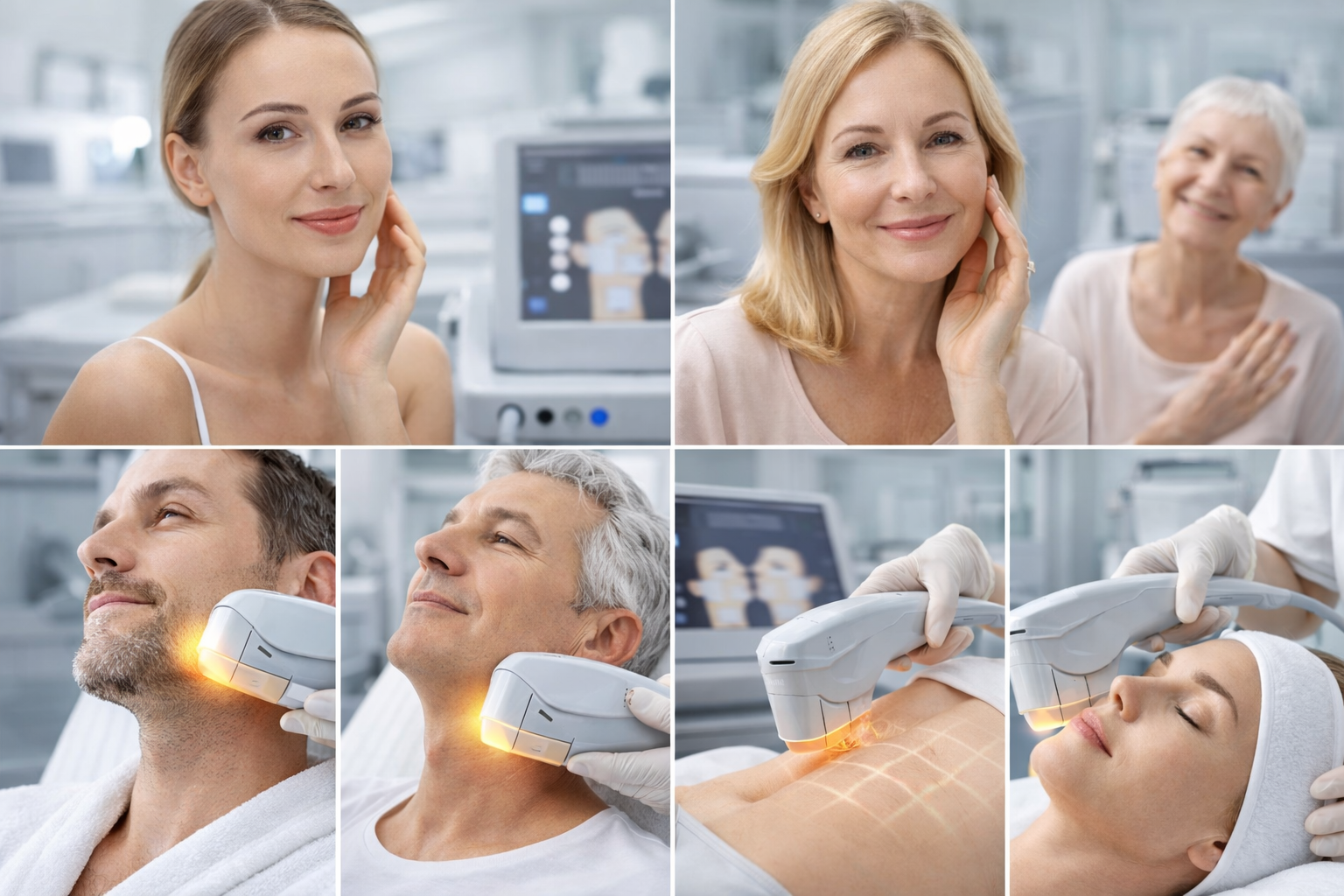
HIFU Treatment is not a universal fit, but the group of people it suits is broader than many assume. The single quality most good candidates share is mild to moderate skin laxity that they would like to address without surgery.
In Your Late Twenties and Thirties
HIFU Treatment is often used as a preventative measure during this period. Collagen production has started to slow, but the skin still has good elasticity to work with. Early sessions gradually support the skin's firmness over time, helping the face retain a fresh, youthful character for longer. It is a considered, anticipatory approach rather than a corrective one.
In Your Forties and Fifties
This is the most common age group for HIFU Treatment. By this stage, the first true signs of laxity begin to show along the jawline, the cheeks may have started to descend, and the stomach or upper arms may feel softer than they once did. These are exactly the sort of changes HIFU Treatment was developed to address, offering a natural sense of lift and firmness without surgery.
In Your Sixties and Beyond
HIFU Treatment can still be considered for people in their sixties and beyond, particularly where surgery is not desired. More mature skin may show more subtle results, because there is less collagen reserve to stimulate, but change is still possible. Many people in this age group prefer the softer outcome over the more obvious result of surgery.
Suitable for Men and Women
HIFU Treatment is considered for men as well as women. Men often come in with concerns around jawline definition, a softer neckline or slight heaviness around the brow. The appeal of a non-invasive option is that there is no visible recovery and nothing to reveal — only a gradual refreshing that simply reads as looking well.
After Previous Cosmetic Surgery
HIFU Treatment is also considered by people who have had cosmetic surgery in the past and would like to support those results over time. Used as a long-term maintenance approach, it encourages ongoing collagen activity that helps preserve the firmness achieved by the original procedure.
HIFU Treatment is not ideal for people with very advanced skin laxity — where surgery is likely to be more appropriate — or for those with an active skin condition in the treatment area, open wounds, implanted electronic devices near the treatment zone, or during pregnancy. A proper consultation will identify any reason the treatment would not be suitable, well before anything goes ahead.
What to Expect During a Session
Taking the first step into a HIFU Treatment session can feel unfamiliar, so it helps to know what happens along the way.
The Consultation
Every session begins with a consultation, if one has not already been held. The practitioner will look carefully at the areas you would like to treat, discuss what is reasonable to expect, and go through your medical history to plan the session well. Expectations matter, and a thoughtful practitioner will be honest — HIFU Treatment is a supportive treatment, not a replacement for surgery, and being clear about that from the start sets the experience up well.
Preparing the Skin
The area is cleansed, and a conducting gel is applied to the skin to help the ultrasound energy pass smoothly through the surface. Treatment lines or a grid may be drawn on the face or body as guidance. This part is unhurried — a careful practitioner will take time with the mapping.
The Treatment Itself
The handheld applicator is moved across the marked areas, with pulses delivered at the chosen depths. Most people describe the sensation as a warm, prickling feeling that starts and stops with each pulse. Certain zones — particularly those close to bone, such as the jawline and forehead — can feel more intense, though the treatment is generally well tolerated and does not usually require anaesthetic.
Session Length
Timing varies by area. A full face session usually takes about an hour. Smaller zones, such as only the jawline or the eye area, can be completed in around fifteen to thirty minutes. Body areas vary too — larger zones like the stomach or thighs take around forty-five to sixty minutes, and smaller areas such as the backs of the hands take less.
After the Session
After the treatment, the skin may appear slightly pink and feel tender to the touch for a day or two. Some people experience light swelling that settles quickly. Normal activities — washing the face, applying makeup, going to work, even exercising — can usually resume the same day. A little extra hydration and a simple skincare routine are sensible for a couple of days. There is no complex aftercare to follow, no prescription cream, and no real disruption to daily life.
The Safety of HIFU Treatment
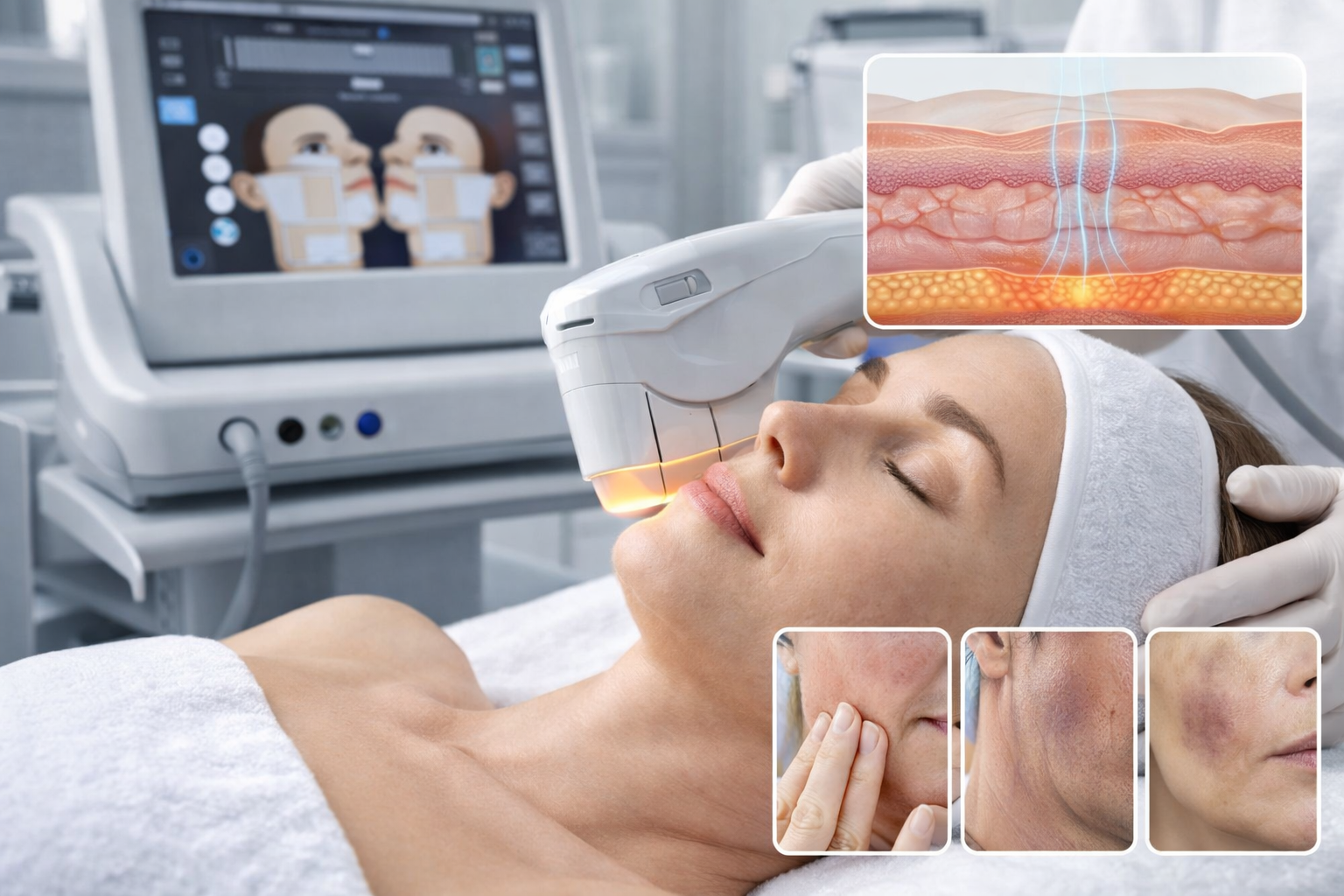
One of the reasons HIFU Treatment is widely considered in aesthetic care is its safety profile. The underlying ultrasound technology has a long clinical history in medicine, and it has been carefully adapted for cosmetic use.
By design, HIFU Treatment is gentle on the tissue surrounding the target depth. Because the ultrasound energy is focused only at a chosen point beneath the skin, the surface and neighbouring structures are left undisturbed. This is a meaningful contrast to treatments that work by creating surface damage to trigger a repair response, and it is a large part of why recovery is so minimal.
No cosmetic procedure is entirely without risk, and honest consultation includes this reality. The most common side effects are mild and temporary — redness, warmth, light swelling and occasional tenderness in the treated area. These typically settle within hours to a couple of days. Small bruises or short-lived changes in sensation can also occur, though less often. More persistent effects are rare and are almost always linked to treatment by someone without proper training.
Safety ultimately rests on who is performing the treatment. The technology is sound, but it must be used within the bounds of proper training, a good understanding of facial anatomy, and careful monitoring of energy and depth. A well-qualified practitioner is more important than a low price.
Some groups are not suitable candidates for HIFU Treatment. This includes pregnancy and breastfeeding, an active infection at the treatment site, open wounds in the area, implanted medical electronic devices such as a pacemaker near the treatment zone, and certain skin conditions present on the treated area. A proper pre-treatment consultation will check for each of these before any treatment is considered.
When performed thoughtfully by a trained practitioner, HIFU Treatment is among the safer non-surgical lifting options available.
Frequently Asked Questions
Does HIFU Treatment hurt?
Most people describe the sensation as a warm, prickling feeling that comes and goes with each pulse of energy. Some zones are more intense than others — areas close to bone, such as the forehead or jawline, tend to be the most noticeable. The discomfort is brief and stops as soon as the applicator moves on. Sessions are generally performed without anaesthetic, though some clinics may offer a topical numbing cream for more sensitive skin. Pain tolerance varies from person to person, and your experience may not be the same as someone else's.
How many HIFU Treatment sessions are needed?
For many people, a single session is enough to see a meaningful result, because the collagen-building process continues quietly for months afterwards. Those with more advanced laxity or larger treatment areas may benefit from a second session a few months later. A maintenance session every nine to twelve months helps keep the results consistent over time.
How long do the results last?
Most people enjoy results for six to eighteen months, often close to the twelve-month mark. The length of time varies with age, lifestyle and how responsive your own body is to collagen stimulation. Sun exposure, smoking, poor sleep and a nutritionally light diet can reduce the durability of results. Sensible habits — good sun protection and a steady skincare routine — help support the effect of every session.
Can HIFU Treatment be combined with other treatments?
Yes, and many people find combining treatments gives the most complete result. Because HIFU Treatment works at deeper layers, it pairs naturally with surface treatments such as chemical peels, microneedling and laser resurfacing, which address texture, tone and pigmentation. Some people also combine it with injectables, such as dermal fillers. A practitioner who understands combination planning will space the treatments thoughtfully so each has space to deliver its effect.
At what age is HIFU Treatment suitable?
There is no single ideal age. People in their late twenties and thirties often use HIFU Treatment preventatively, while those in their forties and fifties tend to use it when the first visible signs of ageing begin to appear. Older adults can still benefit, though results may be more modest when the skin has less collagen reserve to respond with. The right time is really when softening becomes noticeable to you and you feel ready to do something supportive about it.
Is HIFU Treatment suitable for all skin tones?
Generally yes. Because HIFU Treatment uses ultrasound rather than light, it does not interact with melanin the way laser treatments do. This makes it a safer consideration for deeper skin tones, where light-based treatments can sometimes cause pigmentation changes. Every skin is different, though, and a proper consultation is essential to confirm the treatment is suitable for you.
What does recovery look like?
One of the most appreciated features of HIFU Treatment is the easy recovery. Most people leave their session and carry on with work, fitness or social plans the same day. Slight redness, mild swelling or warmth in the treated area are all normal and usually settle within hours. A few people feel some tenderness for a day or two. No time off is needed, and makeup can be applied straight away if required. The treatment is genuinely low-impact.
Will HIFU Treatment affect my daily life?
Very little. There is no dressing, no stitches and no restriction on washing or movement, and most people return to their normal day immediately. Many find they can fit a session into a lunch break or on the way home from work. This is part of what makes the treatment appealing to busy professionals, parents, and anyone who cannot accommodate a long recovery period.
How often are maintenance sessions needed?
After the first session, most people have a maintenance session every nine to twelve months. Some prefer to leave more time between sessions and return when they begin to feel the original effect softening. The right interval depends on your skin, your age and how steadily your body produces new collagen. A practitioner can plan a schedule suited to your situation rather than following a generic routine.
How does HIFU Treatment compare to fillers or anti-wrinkle injections?
They are quite different treatments. Fillers add volume beneath the skin, and anti-wrinkle injections relax the muscles behind dynamic expression lines. HIFU Treatment adds nothing and relaxes nothing — it encourages your own collagen to rebuild the skin's support from within. Because each approach addresses a different concern, many people use them in combination. A consultation is the best way to understand which approach, or combination, suits your goals.
HIFU Treatment has become one of the more sensible, thoughtful non-surgical options for anyone who would like firmer, lifted skin without committing to a surgical procedure. Rather than working against the body, it works with it, gently encouraging the same collagen that gave the skin its natural support in the first place. The results are slow, quiet and discreet, which is exactly the character many people are looking for improvement that feels like their own, rather than something imposed. Whether you are thinking about it for the face, the body, or both, understanding how HIFU Treatment works is a good first step, and the rest of this site offers more reading for anyone who would like to explore further.