
HIFU Treatment is a non-surgical option for lifting and tightening the skin on the face, neck and body. It uses focused ultrasound energy to encourage collagen production at depths most other in-clinic treatments cannot reach. This page explains what the treatment involves, which areas it can support, who tends to benefit most, and what honest results look like so you can think clearly about whether it is right for you.
What HIFU Treatment Actually Does
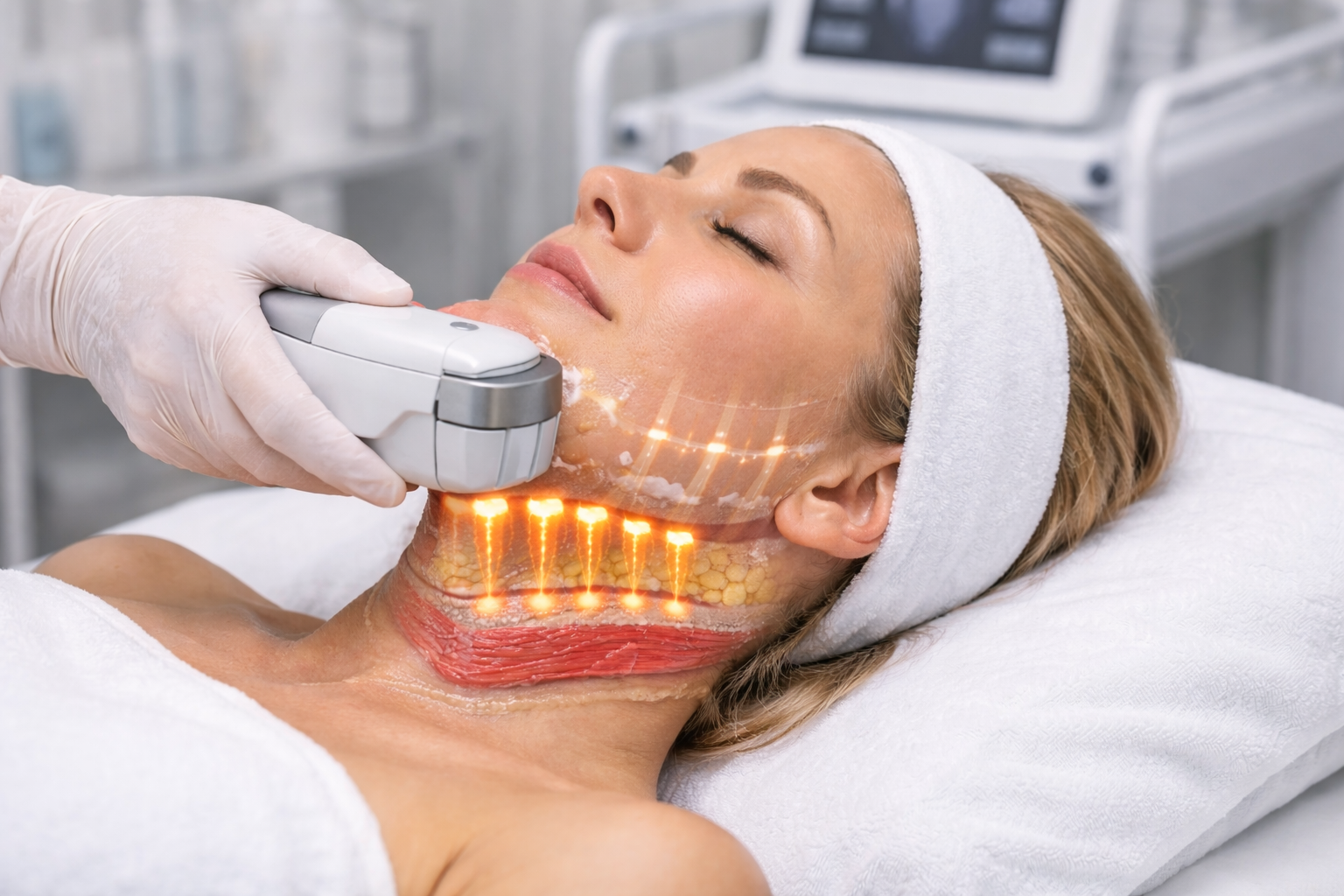
The handpiece used during a HIFU Treatment session delivers focused ultrasound energy through the surface of the skin and into the tissue layers beneath. Related body treatment information is available at https://camberley.hi-fu.co.uk/body/. At precise depths, this energy creates tiny, controlled heat points small enough that the surface remains intact, yet warm enough to trigger a healing response in the deeper layers where laxity actually begins.
These heat points do two things. First, they cause immediate contraction of existing collagen fibres, which can give some people a mild tightening effect on the day. Second, and more importantly, they wake up the body's natural repair process. Over the following weeks, fibroblasts the cells responsible for producing collagen and elastin become more active in response. New, denser, better-organised collagen gradually replaces the older, looser structure. This is the slow-build half of the result, and it is what gives HIFU Treatment its reputation as a genuine lifting treatment rather than a surface-level polish.
Think of it less as ironing out wrinkles and more as rebuilding the scaffolding that holds the skin where it used to sit. The muscles do not tighten; the connective layer supporting them does. Treatments such as https://camberley.hi-fu.co.uk/femiwand-vaginal/ also focus on tissue support and renewal. Over three to six months, that structural change translates into a cleaner jawline in photographs, cheeks that sit a little higher, and skin that feels denser when you press it.
The treatment is non-invasive in the proper sense of the word. Nothing breaks the skin, nothing is injected, and no incisions are made. What you receive is a clinical procedure that works alongside your own biology. Because it is your own collagen doing the work, the results tend to read as natural rather than done.
The Science Behind HIFU
HIFU stands for High-Intensity Focused Ultrasound. The word "focused" is what sets it apart from the ultrasound used in, for example, pregnancy scans. Diagnostic ultrasound spreads sound waves across a broad area so a clinician can see what lies beneath. HIFU Treatment does the opposite it concentrates those sound waves at a single, precise depth, in the way a magnifying glass focuses sunlight onto one point. Above and below that focal point, the tissue is left undisturbed.
The Three Key Depths
Three depths matter clinically. At around 1.5 mm, the energy reaches the superficial dermis useful for fine textural work, particularly around the eyes and forehead. At around 3 mm, it reaches the deeper dermis, where most collagen remodelling takes place and where textural change on the face and body is supported. At around 4.5 mm, it reaches the SMAS, the Superficial Musculoaponeurotic System a fibrous layer that a surgeon would lift and reposition during a traditional facelift. Reaching this depth non-surgically is part of what makes HIFU clinically interesting in the first place.
Precise Thermal Points
At each depth, the device creates a column of tiny thermal coagulation points. Each point is a fraction of a millimetre across, and the tissue between them is left untouched. This is one of the reasons downtime is so limited. The skin is not recovering from a wound across its entire surface it is responding to a pattern of pinpoint stimulation distributed through the deeper layers.
Why the Surface Stays Intact
The reason the skin's surface remains unaffected is physics, not marketing. Sound waves only release their energy where they converge. As they pass through the outer layers of the skin in a more scattered state, no damage occurs. Only at the focal point, millimetres below the surface, do they concentrate enough energy to matter.
The takeaway is simple. HIFU Treatment works at the same depths a facelift addresses, without cutting. It is not a replacement for surgery in every case but for those who are not ready for that step, or do not wish to take it, the science supports what the treatment is designed to do.
Areas HIFU Treatment Can Address
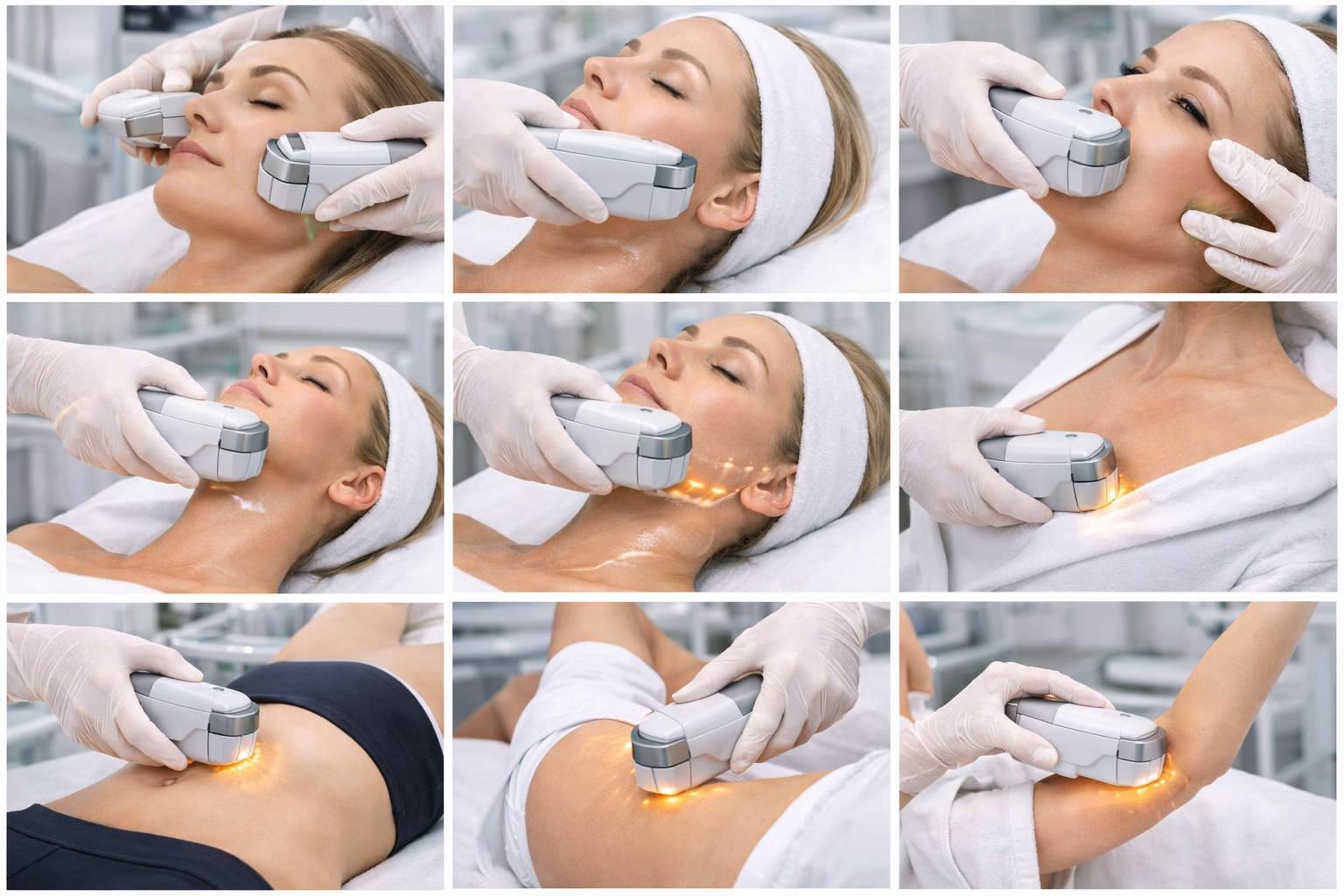
HIFU Treatment is not a single protocol applied identically everywhere. The handpiece, the depth and the energy settings are all adjusted based on the area being treated, because skin thickness, underlying anatomy and the concern at hand all vary. What follows is a practical breakdown of where the treatment is most often used starting with the face and neck, then moving to body areas where tightening or contouring is the goal.
Full Face
Treating the full face in a single session addresses laxity, volume loss and textural concerns together rather than in isolation. Practitioners usually work in zones forehead, cheeks, lower face, jawline at varying depths, building up a cumulative lifting effect. For related facial treatment information, see https://camberley.hi-fu.co.uk/hifu-face/. Results develop over around three months and settle as a general refreshing rather than a dramatic change, which is usually what people want from a single session.
Jawline
The jawline is where laxity shows up first for many people, and it is often the reason someone first looks into HIFU Treatment. As supporting tissue loosens from the mid-thirties onwards, skin along the jaw drifts gently downward, softening the line between face and neck. Treatment along this zone tightens the SMAS beneath and can redefine a jaw that has started to look heavy or indistinct. Results are subtle week by week, but comparing a photograph from before treatment to one three months later usually shows a cleaner line.
Cheeks
Treating the cheeks addresses two things at once laxity, and the position of volume. As collagen breaks down, the fat pads that sit high in the cheek in your twenties begin to slide, flattening the mid-face. HIFU Treatment on the cheeks lifts this deeper tissue a little, which helps restore some of that structural height. It is not the same as filler you are not adding volume, you are firming what is already there. Many people describe the result as looking rested rather than lifted, which tends to be the more flattering outcome.
Forehead and Frown Lines
Forehead lines and the vertical crease between the brows respond to HIFU Treatment in a gradual way. Because these lines are partly caused by repeated muscle movement, the treatment does not erase them the way a muscle-relaxing injection can. What it does is thicken and firm the skin over those areas, which softens how deep the lines appear and slows the formation of new ones. It works well as part of a broader strategy rather than a stand-alone solution for dynamic wrinkles.
Crow's Feet
The skin at the outer corners of the eyes is thin, expressive, and among the first to show ageing. HIFU Treatment at a shallower depth typically around 1.5 mm stimulates collagen renewal in this delicate zone without needing to go any deeper. The aim is a smoother, slightly firmer surface, not the flat look that can come from overdoing injectables. Done carefully, it softens crow's feet while leaving the natural expressiveness of the eye area intact.
Eyebrow Lift
A non-surgical brow lift through HIFU Treatment works by tightening the tissue above and slightly to the outer edge of the brow, which lifts the tail of the eyebrow by a few millimetres. It is a subtle effect there is no dramatic arch change, as there would be with surgery. For people whose brows have settled lower over time, it can open up the upper eye area noticeably.
Double Chin
The soft tissue beneath the chin can accumulate fullness for reasons beyond weight. Loss of skin elasticity, genetics and the way fat distributes with age all contribute. HIFU Treatment targets this area at multiple depths deeper to address the SMAS and encourage lifting, and shallower to firm the overlying skin. In some cases it can also reduce small pockets of fat through the same thermal process. The outcome is a sharper angle between the jaw and neck, which tends to read as slimmer even when weight has not changed.
Sagging Neck
The neck ages differently from the face and often ends up showing lines and laxity that the face itself has not yet caught up to. Treatment here focuses on tightening the horizontal bands of laxity and firming the skin along the sides of the neck, where gravity has the clearest visible effect. It is one of the areas where HIFU Treatment reliably produces a result that people notice in the mirror partly because the starting point is often quite visible, and partly because the skin here responds well to collagen stimulation.
Decollete
The upper chest collects sun damage more thoroughly than almost any other area of the body, and the crêpey texture it can develop is a common concern from the late thirties onwards. HIFU Treatment on the decollete firms the skin and reduces the papery quality that comes from thinning dermis. It will not fully correct pigmentation from sun exposure that is better addressed by other treatments but the overall quality of the skin in this area can feel meaningfully supported.
Stomach
HIFU Treatment on the stomach is about tightening, not weight loss. Women who have had children often find the skin along the lower abdomen has lost some of its original firmness and does not respond to exercise alone. By stimulating collagen production in the dermal and sub-dermal layers, the treatment firms the surface and can modestly contour the area. The effect is gradual and suits people who are already close to their target shape, rather than those seeking significant fat reduction.
Thighs
The inner and outer thighs are commonly treated because the skin here tends to loosen with age, weight change or after pregnancy. HIFU Treatment firms the overlying skin and can soften the dimpled appearance associated with mild cellulite, though it is not a dedicated cellulite treatment. A course of sessions, rather than a single visit, usually produces noticeable change, and results tend to hold well when combined with regular movement.
Hips
Treatment around the hips and flanks addresses the soft area sometimes described as love handles. HIFU Treatment here works on two fronts firming the skin, and encouraging a subtle reduction in the small pockets of subcutaneous fat that sit above the hip bone. It is most effective for people who already have a relatively lean frame and would like more definition in an area that resists diet and exercise. The shaping effect is quiet rather than dramatic.
Buttocks
HIFU Treatment on the buttocks is essentially a non-surgical skin-tightening session, not a volume-adding one. If skin has lost firmness through weight loss or age and the area looks softer than it used to, treatment can lift and tighten the surface tissue. It will not add shape or volume the way a surgical procedure would, so expectations need to be honest.
Upper Arms
The skin of the upper arms, particularly on the underside, is one of the most common body concerns from the forties onwards. HIFU Treatment firms the dermis in this area, which reduces the soft, swaying appearance caused by loss of collagen. It will not remove significant fat, and it cannot address skin that has stretched beyond what tightening can reach. For mild to moderate laxity, though, it is one of the more effective non-surgical options available.
Back
Back treatment is less common, but genuinely useful for people with skin laxity between the shoulder blades or along the bra line. The session is longer because the surface area is larger, and results develop over the same three-month window as any other body area. This is a firming treatment, not a contouring one, and expectations should match that.
Backs of the Hands
Hands give away age more quickly than most people realise, and the skin on the back of the hand loses dermal thickness in the same way facial skin does. HIFU Treatment in this area firms the skin and softens the papery quality that develops from the early fifties onwards. It does not address veins or pigmentation — what it does is restore a little density to hands that have started to look older than the face they belong to.
Who HIFU Treatment Suits
Age is a more useful frame than marketing personas for thinking about whether HIFU Treatment fits you. Each decade brings a different skin structure, a different set of concerns and different realistic outcomes.
In Your Twenties and Thirties
HIFU Treatment at this stage is mostly about prevention and maintenance. Collagen production starts slowing in your mid-twenties, and the earliest signs of laxity around the jaw and under the eyes usually appear somewhere in your thirties. A session at this point is not trying to fix much it is supporting the production processes that have begun to slow, helping skin quality stay where it is rather than drift. People who start at this age often need fewer interventions later.
In Your Forties and Fifties
This is the core age group for HIFU Treatment and where the most visible results tend to show up. By this stage, collagen loss has compounded, gravity has started to take a clear effect, and the soft tissue of the face has shifted gently downwards. Treatment at this age has something substantial to work with skin that has loosened but is still responsive and often produces the kind of lifting that is clear in photographs. For many people, this is the decade when a course of two or three sessions can meaningfully delay any conversation about surgery.
Over Sixty
Results over sixty are real but more modest. Collagen production slows further with age, and skin that has lost significant elasticity does not respond as quickly or dramatically as it did at fifty. That does not mean the treatment is not worthwhile it often still is. Expectations simply need to be adjusted. The improvement is usually in the range of firming and refreshing rather than lifting dramatically, and for some people a surgical consultation is the more honest next step. A thorough assessment will make clear which situation applies.
Men
Men use HIFU Treatment for the same reasons women do, and they often respond particularly well male skin is structurally thicker, with more collagen per square centimetre. The concerns men raise most often are softening along the jaw, the double-chin area, and loss of definition in the neck. Men also tend to tolerate the sensation of treatment well and don't mind the absence of downtime, which fits schedules that cannot accommodate visible recovery.
Women Around Perimenopause
Concerns for women often shift around perimenopause and menopause. Falling oestrogen levels accelerate collagen loss, and many women notice a sudden change in skin firmness across a two-to-three-year window in their late forties or early fifties. HIFU Treatment at this stage cannot reverse the hormonal shift, but it can offset some of the structural consequence by stimulating the collagen production that hormones used to support. It also combines well with other age-appropriate treatments rather than competing with them.
What all these groups have in common is that HIFU Treatment works best on skin that still has some elasticity to respond. Very lax or heavily sun-damaged skin that has passed a certain threshold will not tighten the way skin with underlying reserve will. That is a conversation worth having honestly at consultation.
Who HIFU Treatment Does Not Suit
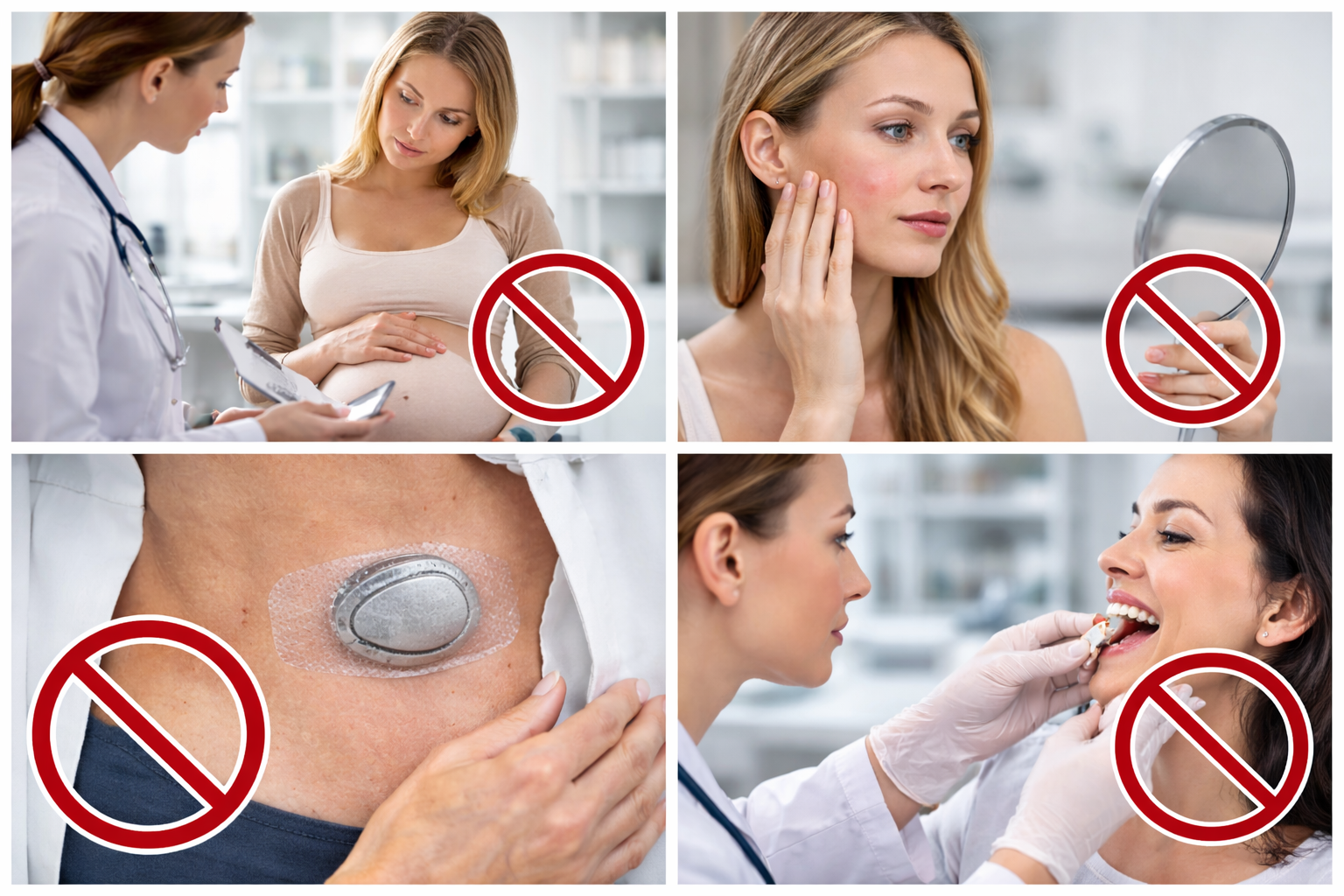
A proper consultation should rule most of these out before anything is booked, but the main exclusions are worth knowing up front. Pregnancy and breastfeeding are not compatible with HIFU Treatment — not because risk has been conclusively shown, but because it has not been studied enough to offer treatment during those periods. Active skin infections, recent cold sore outbreaks in the treatment zone, and significant skin conditions such as untreated rosacea flares need to resolve before treatment.
Metal implants, pacemakers and some dental implants can limit where the handpiece can be used. In some cases the treatment can still go ahead but will be mapped carefully around those areas. Certain autoimmune and connective tissue conditions are cautions rather than outright exclusions and need individual medical discussion. Severe skin laxity that has passed what tightening can reasonably address is an honest referral towards a surgical consultation.
What a Session Actually Feels Like
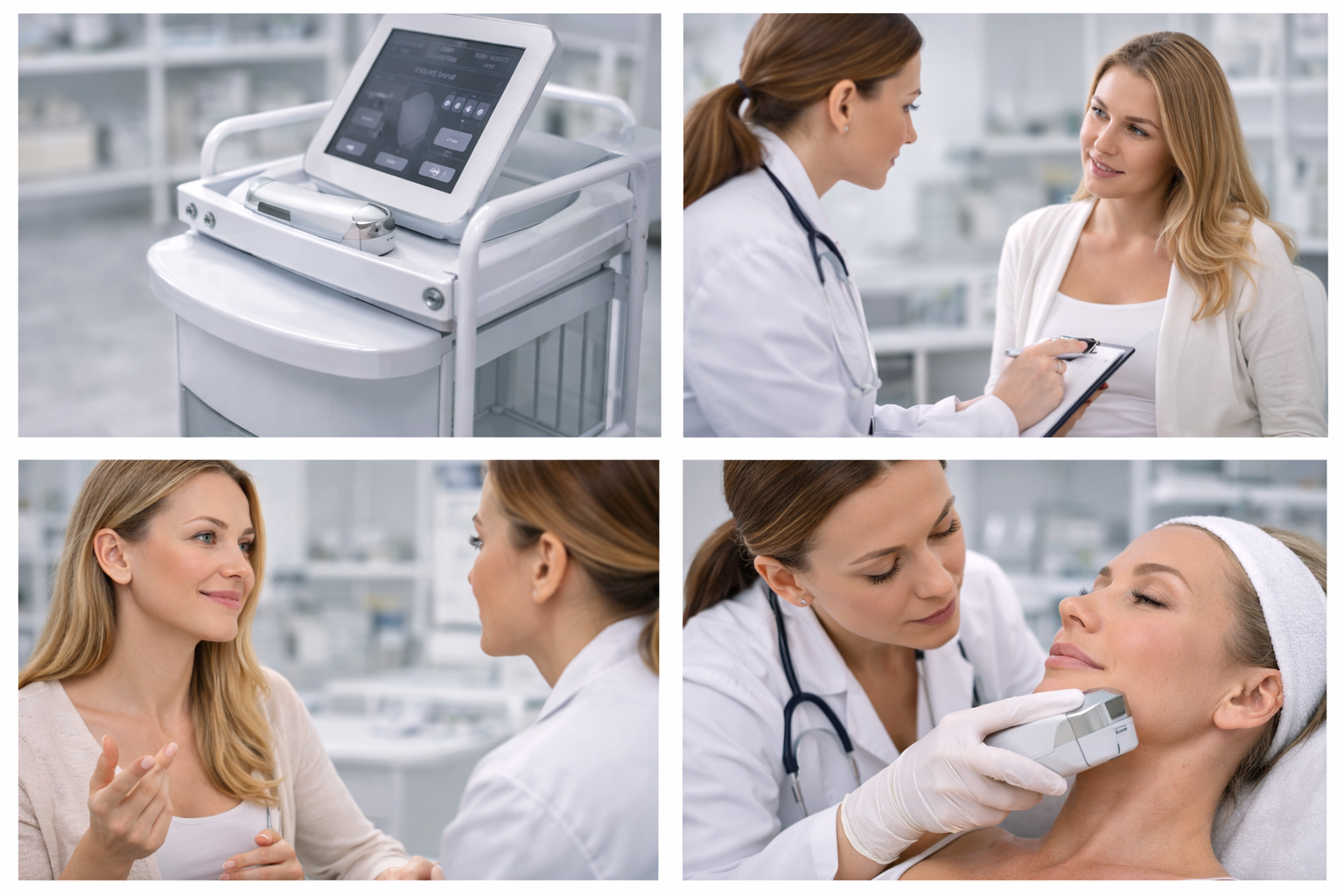
A HIFU Treatment session usually begins with a consultation, if one has not already taken place. The skin is assessed, the medical history is checked, and the treatment areas are confirmed on a mapping grid drawn lightly on the skin with a washable pencil. The grid matters it ensures consistent coverage, so no area is missed and none is treated twice.
Preparing the Skin
Once you are on the treatment couch, the skin is cleansed. Any residue from skincare, moisturiser or sunscreen is removed first, because it can interfere with how the ultrasound couples with the skin. A clear gel is then applied generously, thick enough to allow the handpiece to glide smoothly and to transmit the ultrasound energy properly. Nothing is injected, and nothing sharp touches the skin.
During the Treatment
The practitioner moves the handpiece along the grid in short, deliberate passes. Each pass delivers a line of treatment points at the depth chosen for that zone. A quiet mechanical click is audible as each line is delivered a sound that becomes familiar within the first minute.
What you feel depends on the area. Over the broader flat zones of the face, most people describe a brief prickling or warmth as each line fires noticeable but easy to breathe through. Over the jawline, and particularly where skin sits close to bone along the lower jaw, above the brow, along the collarbone the sensation can feel a little sharper for a second, like a deeper pinprick. It passes within moments, and the pace can be slowed or paused if needed.
Session Length
Sessions run anywhere from about twenty minutes for a small area, such as the brow or crow's feet, through forty-five minutes to an hour for a full face, and up to ninety minutes or more for larger body areas. Numbing cream is generally not needed for facial work and can actually make it harder to feel the calibration of the treatment. For body areas, comfort varies and numbing may be offered.
After the Session
When the session ends, the gel is wiped away and the skin is usually slightly pink for an hour or two. You head out, go back to work, pick up children, meet a friend for coffee. Nothing about your day needs to change. The treatment has taken place, and the result is already working quietly beneath the surface.
Results and When to Expect Them
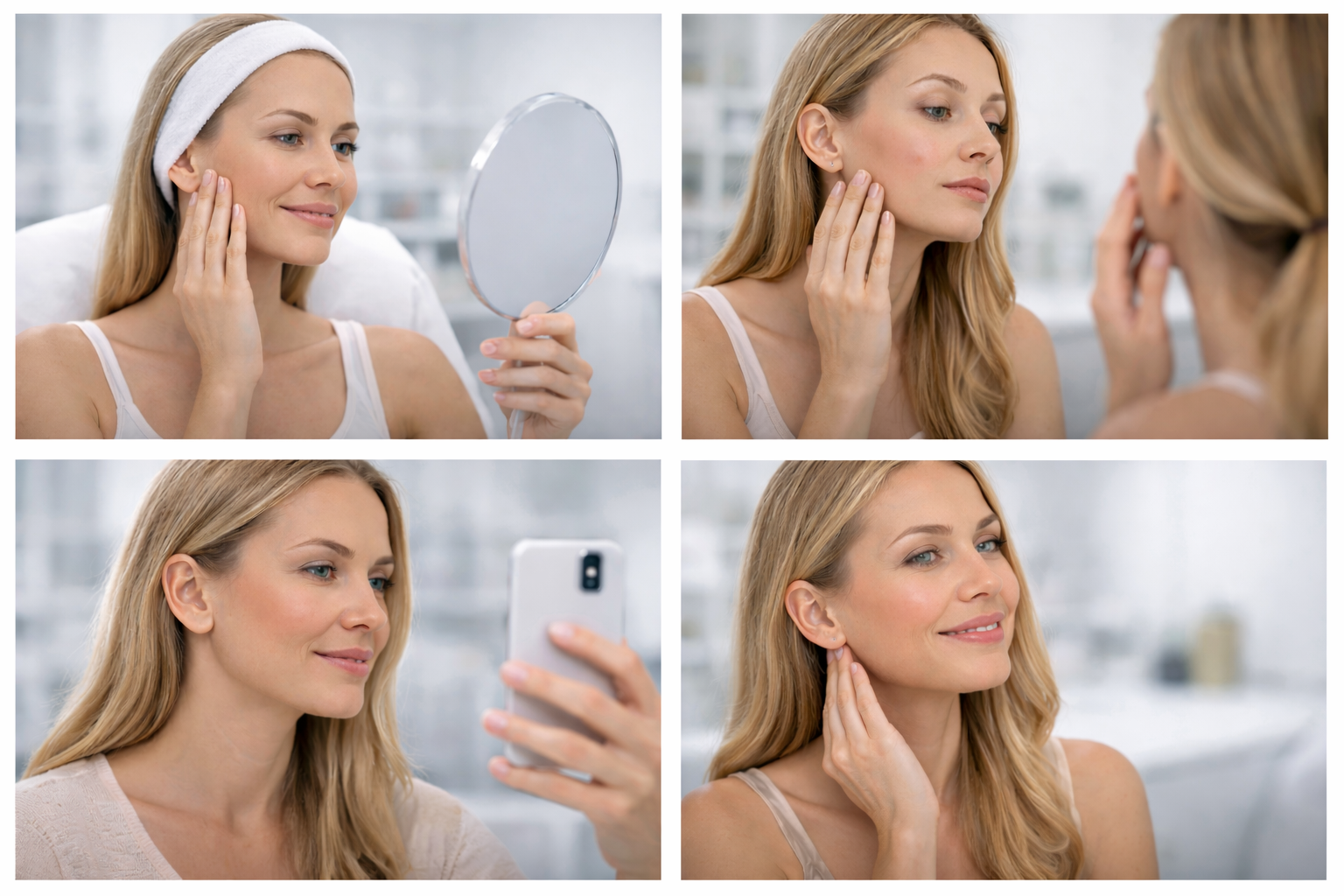
Expectations are where HIFU Treatment is most often misrepresented, so it is worth being precise about what happens when.
On the Day of Treatment
Some people notice a mild tightening on the day a slight firming in how the skin feels, and occasionally a subtle immediate lift on close inspection. This is the contraction of existing collagen fibres in response to warmth, and it is a temporary effect. Not everyone experiences it, and it should not be mistaken for the main result.
Weeks One to Three
The first two to three weeks after treatment are usually quiet. You might notice nothing at all, or very subtle changes that are easy to second-guess. This is normal. Collagen production takes time to ramp up, and new collagen takes longer still to replace the older, looser structure. People who judge the result by what they see in the mirror the following week often miss what is actually happening beneath the surface.
From Week Four Onwards
From about week four, changes start to become visible. The jawline looks cleaner in profile photographs. The skin feels firmer when you rest your hand against your cheek. The fold at the front of the neck is less pronounced. These shifts continue gradually through months two and three, and the fullest result is usually in place around the three-month mark.
How Long Results Last
Results typically last between twelve and eighteen months, though this varies with age, skin quality, lifestyle factors such as sun exposure and smoking, and how advanced the laxity was to begin with. A twenty-eight-year-old starting preventatively will maintain results differently from a sixty-year-old addressing established laxity.
Single Session or a Course?
Whether you need one session or a course depends on the starting point. People with good skin quality and early signs of laxity often do well with a single session every twelve to eighteen months. Those starting from a more advanced point tend to benefit from a course of two to three sessions, spaced a few months apart, followed by maintenance.
Aftercare and Downtime
The honest answer on downtime is that there is not much of it. Most people return to their normal activities the same day including work, childcare and social plans. That said, a few sensible rules for the first forty-eight hours make a difference.
The First Forty-Eight Hours
Avoid very hot showers, saunas, steam rooms and hot yoga. Heat on freshly treated skin can amplify any lingering inflammation and is not worth the risk. Intense exercise that raises body temperature significantly is best postponed for twenty-four to forty-eight hours. A walk is fine; a spin class is not.
Gentle Skincare
Skincare should be gentle. Skip acids, retinoids, scrubs and strong active ingredients for about three days. A simple moisturiser and sunscreen are what the skin wants in the first forty-eight hours. Alcohol in moderation is not a concern, though excess will not help the healing response and is worth limiting for a few days.
What You May Notice
Visibly, most people notice a mild pinkness for an hour or two after treatment. A small number experience some puffiness over deeply treated areas, particularly along the jawline or under the eyes. This usually settles within twenty-four to forty-eight hours. Tenderness over bony areas such as the cheekbones or jaw is not unusual for a day or two and responds well to paracetamol if needed. Very occasionally, small bruises appear where the handpiece passed over a superficial blood vessel. These fade within a week.
When to Call the Clinic
Contact the clinic if you notice anything more than this sustained swelling, persistent pain, or any change that concerns you. Proper providers expect these calls and would much rather hear from you than not.
HIFU Treatment Compared to the Alternatives
No non-surgical treatment is universally the right answer, so a fair comparison with other options helps with making a considered choice.
| Comparison | How It Differs From HIFU Treatment |
|---|---|
| Surgical Facelift | A facelift produces a deeper, longer-lasting result — often ten years or more, compared with twelve to eighteen months for HIFU Treatment — because it physically repositions tissue. It is also surgery, with anaesthesia, incisions, two to three weeks of recovery, higher cost and permanent change. HIFU Treatment is a non-surgical middle path that does not match surgical results for advanced laxity, but produces genuine structural improvement for mild to moderate concerns, without any of the commitment surgery requires. |
| Radiofrequency | Both tighten skin by heating the deeper layers, but they reach those layers differently. Radiofrequency uses electrical energy through surface electrodes, and the heat spreads through tissue in a broader, less targeted pattern. HIFU Treatment uses focused sound waves to deliver concentrated energy at a precise depth — which means it can reach the SMAS layer beneath the muscles of facial expression, where radiofrequency generally cannot. Both work for superficial-to-mid-depth tightening; HIFU Treatment has the advantage for deeper structural lifting. |
| Injectables | This is often framed as a competition, and it should not be. Muscle-relaxing injections address lines caused by expression; fillers address lost volume; HIFU Treatment addresses laxity in the underlying tissue. They do different jobs on different problems. Many people combine them: filler for volume loss in the cheeks, muscle relaxant for dynamic forehead lines, HIFU Treatment for lifting and tightening the jawline and neck. The mistake is trying to use one to solve what another does better. |
| Laser | Laser treatments mostly work on the surface and upper dermis resurfacing, pigmentation, texture and some shallow collagen stimulation. HIFU Treatment works significantly deeper and does not address surface concerns such as pigmentation, sun damage or textural unevenness. The two target different layers and different problems. Someone with both pigmentation and laxity is a candidate for both, not one or the other. |
| Thread Lifts | Thread lifts physically anchor tissue in a new position using dissolvable threads inserted under the skin. The lift is immediate but temporary usually twelve to eighteen months and there is a small surgical element to the procedure. HIFU Treatment produces results more gradually and does not involve anything being inserted. Threads can suit someone wanting an immediate visible lift; HIFU Treatment suits someone willing to wait for a result that comes from the skin's own biology. |
HIFU Treatment is one of several considered tools for addressing skin laxity non-surgically. It is not always the right one. A proper assessment will recommend the treatment or combination of treatments — that fits your concerns, rather than pushing you toward whichever a clinic most wants to offer.
Safety Considerations
HIFU Treatment is considered a medical aesthetic procedure, and the cautions around it reflect that. The energy being delivered is real. Focused ultrasound, used incorrectly, can cause burns, nerve injury or unwanted fat loss in the wrong tissue plane. Practitioner training and device quality are what separate a safe, effective treatment from a risky one.
Ask About the Device
Ask which device is being used. Medical-grade HIFU platforms carry clinical data behind them; the wider market also contains cheaper, unbranded devices imported without rigorous testing that deliver inconsistent energy at the wrong depths. The difference is not marketing it is safety.
Ask About the Practitioner
The ideal practitioner is a doctor, dentist, nurse or experienced aesthetic practitioner with specific training on the device being used not someone who completed a brief course and began offering treatment the following week. A reputable clinic will tell you who is treating you and what their training consists of without hesitation.
A Proper Consultation
A proper consultation should cover medical history, realistic outcomes, possible side effects and what the cost of a full result looks like not just one session. To arrange one, visit https://camberley.hi-fu.co.uk/consultation-booking/. Feel free to ask what would happen if results do not meet expectations, and how follow-up is handled. Clinics that answer these questions clearly are the ones to choose.
When Done Properly
Side effects at a competent clinic are usually limited to what is described in the aftercare section above. Serious adverse events are rare when HIFU Treatment is performed correctly, with the right device, by properly trained hands all three need to be true.
Common Questions
Will people be able to tell I have had something done?
No, and that is part of what makes HIFU Treatment popular. Because the change comes from your own collagen rebuilding over months, the result reads as natural rather than as visible work. People tend to notice that you look well, rather than that you have had something done — which is usually the question behind the question.
Does it actually hurt, or is that just what clinics say?
Honestly, it is not painless, but it is very manageable. Over flat areas of the face, it feels like a brief prickling and warmth. Over bony zones — the jawline, forehead and collarbone — the sensation is sharper for a second as each line is delivered. Most people describe it as uncomfortable rather than painful, and the pace can be slowed if you need a moment.
How long before I can go back to the gym?
Light movement is fine the same day. Skip intense exercise, hot yoga and anything that significantly raises your body temperature for twenty-four to forty-eight hours, and then return to your normal routine. There is no reason to take a week off training — most people are back at full intensity within two to three days.
If I only have one session, is it a waste?
Not necessarily. For people with good skin quality and early signs of laxity, a single HIFU Treatment can produce visible improvement that lasts twelve to eighteen months. For more established laxity, a single session often will not be enough to reach the full result, and a course of two or three sessions tends to suit better. A proper consultation will tell you which category fits you before you commit.
I am in my sixties. Is it too late?
Not too late, but expectations need to be adjusted. Skin over sixty has less collagen to stimulate and often less elasticity to respond with, so results tend to be more modest than they would be in your forties. For some people, HIFU Treatment still makes a meaningful difference; for others, a surgical consultation is the more honest next step. An in-person assessment is the only way to know which applies.
Can HIFU Treatment tighten skin after weight loss?
Sometimes, depending on how much the skin has loosened. Mild to moderate laxity — the kind that follows ten to twenty pounds of weight loss and responds to time — often tightens well with HIFU Treatment. More significant laxity from major weight loss, where skin has stretched beyond its ability to contract, is usually beyond what any non-surgical treatment can reasonably address.
How can I tell I am getting a medical-grade treatment?
Ask which device is being used, and look it up. Medical-grade HIFU Treatment platforms have clinical studies behind them and are declared openly by reputable clinics. If a price looks significantly lower than the market, that is usually the reason — and the difference is not only about the quality of results, it is about safety. A trustworthy clinic will not hesitate to tell you which device they use.
Can HIFU Treatment be combined with other treatments?
Yes, and it is often a good idea. HIFU Treatment addresses laxity and structural support, which means it pairs well with injectables for volume loss, muscle-relaxing treatments for dynamic lines and resurfacing lasers for texture and pigmentation. A practitioner who understands combination planning will sequence them thoughtfully, so each has room to deliver its own effect.
The only reliable way to know whether HIFU Treatment is suitable for your face or body is an in-person assessment. A good consultation will tell you what to expect honestly, whether it is a sensible fit for your concerns, and whether another treatment, or a combination, might serve you better. That conversation is the sensible next step everything else is guesswork.